I am a data analyst with experience in marketing analytics and customer data platform (CDP) environments. Building on metric analysis and performance interpretation, I have developed a broader interest in understanding and structuring the end-to-end data flow—from data generation to downstream analytical use.
With hands-on experience in performance marketing, CDP and analytics tool integrations, and automation using SQL and Python, I am shaping my career toward analytics engineering. My goal is to design stable data pipelines and standardized data models that allow analytical outputs to be consistently reused across teams and support long-term decision-making.
Contact Me
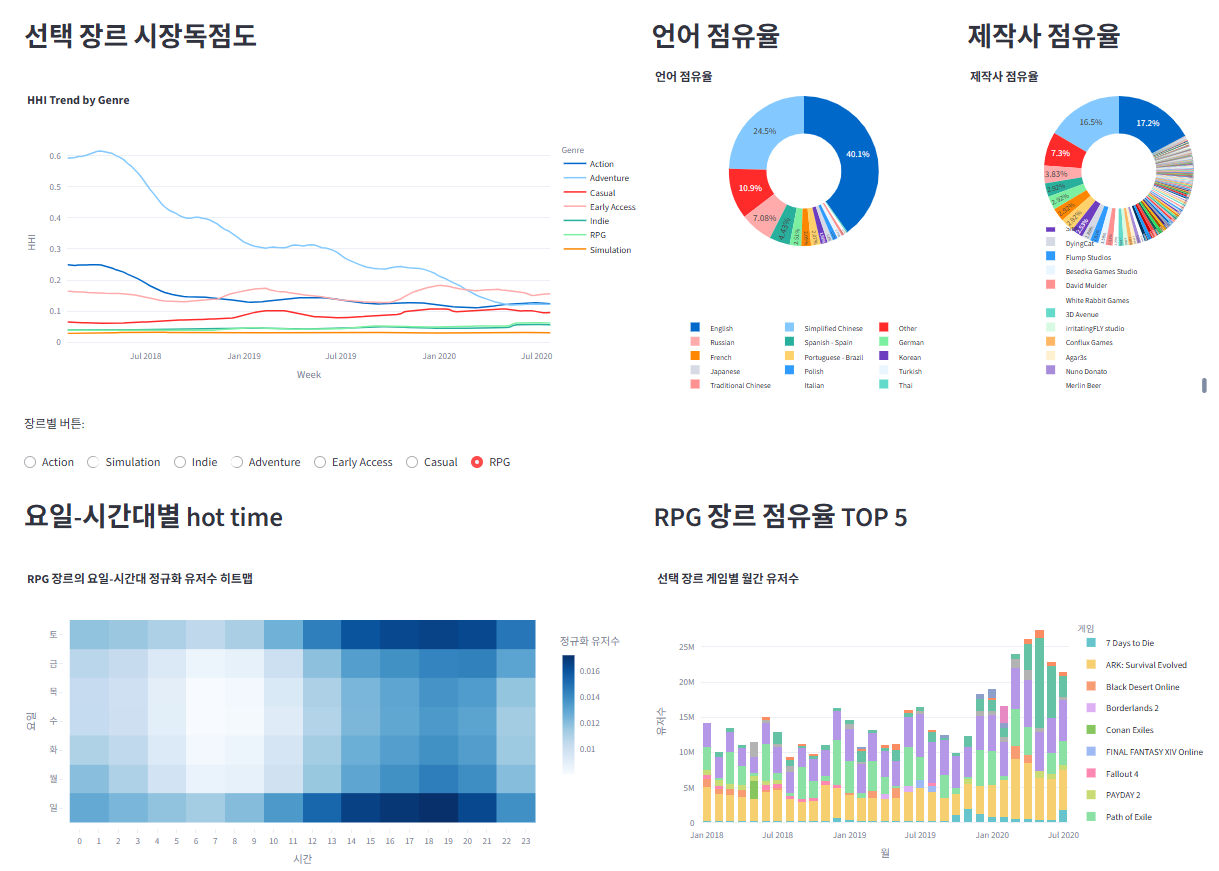
Maple Story Meta Analysis
Use this area of the page to describe your project. Lorem ipsum dolor sit amet, consectetur adipisicing elit. Mollitia neque assumenda ipsam nihil, molestias magnam, recusandae quos quis inventore quisquam velit asperiores, vitae? Reprehenderit soluta, eos quod consequuntur itaque. Nam.
Date:
January 2026
Service:
Web Development
Korean Live Streaming Market Analysis
Use this area of the page to describe your project. Lorem ipsum dolor sit amet, consectetur adipisicing elit. Mollitia neque assumenda ipsam nihil, molestias magnam, recusandae quos quis inventore quisquam velit asperiores, vitae? Reprehenderit soluta, eos quod consequuntur itaque. Nam.
Date:
April 2025
Service:
Marketing Analysis
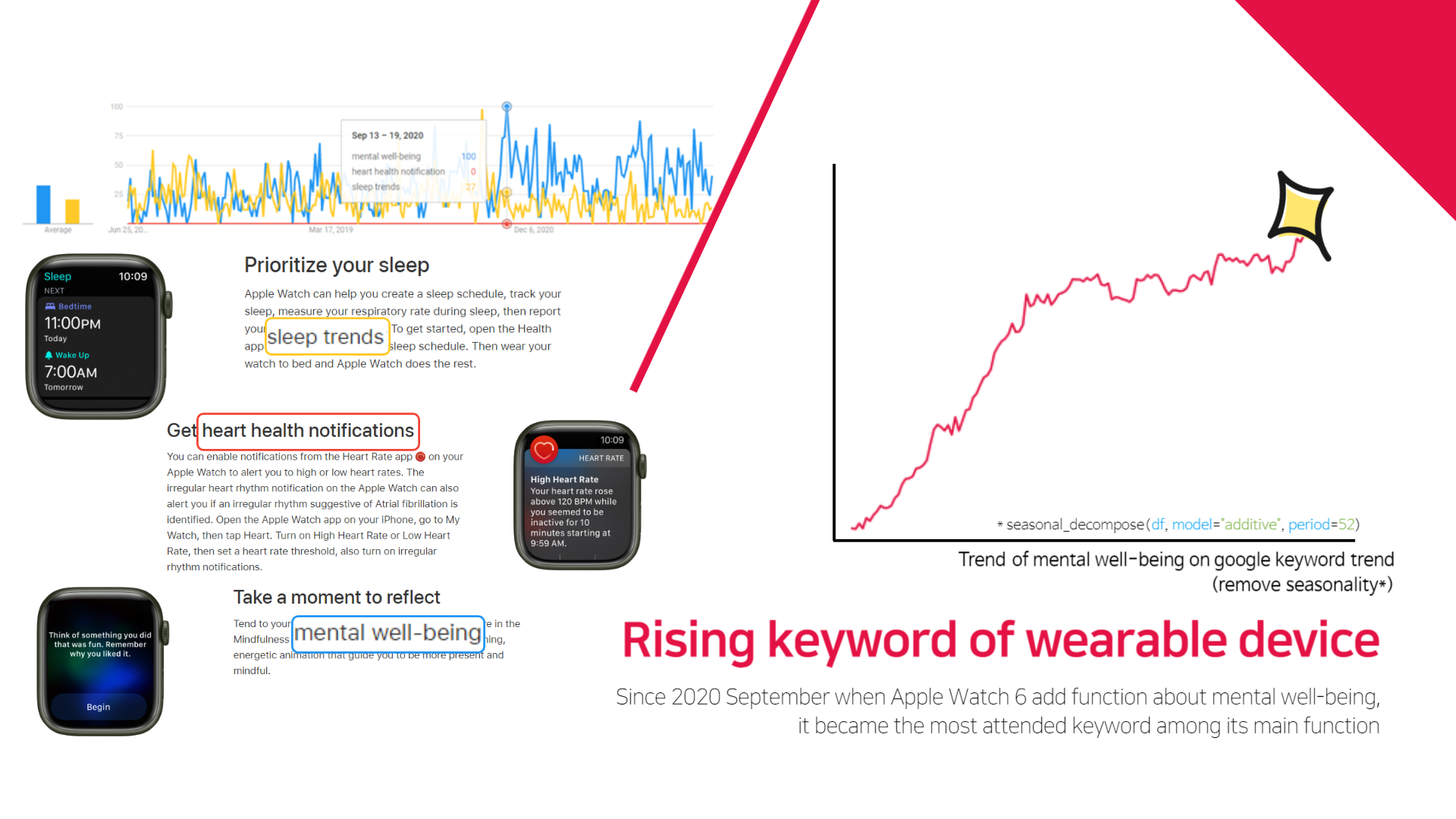
Market Analysis and B2B/B2C Marketing Strategy for the Feels Wearable Device
Validating Market Growth and Campaign Timing through Google Trends–Based Demand Analysis
This project analyzes the wearable healthcare device Feels, with a focus on quantitatively validating market growth and optimal marketing timing using real demand data, rather than relying solely on qualitative market narratives.
While academic papers and industry reports were referenced as supporting context, the core analysis is based on five years of Google Trends search volume data, collected and analyzed directly.
Key analytical outcomes include:
Identification of sustained market growth, indicating that the category has moved beyond a short-term trend
Time-series decomposition revealing clear seasonality with two annual demand peaks (January and August)
Strategic alignment of campaign objectives with seasonal demand patterns:
January: B2C-focused campaigns targeting end users
Given that Feels operates through partnerships with hospitals and counseling centers, the proposed strategy follows a B2B-first approach, securing institutional partners ahead of demand peaks, followed by localized B2C expansion that guides users to nearby service providers.
This project demonstrates how search behavior data can be translated into actionable marketing decisions, bridging data analysis and business strategy.
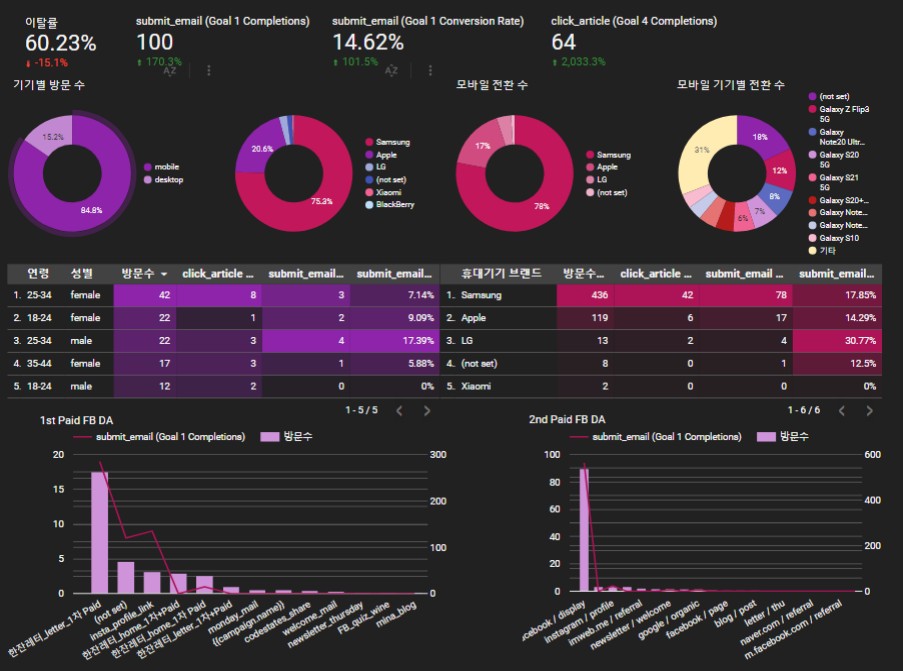
This project focused on validating product–market fit (PMF) and building a performance marketing framework for a liquor-themed newsletter. I implemented Meta Pixel, Google Analytics, and Google Tag Manager to track the full conversion funnel, and used the YouTube API to collect comments and view data from six liquor-related channels to analyze content demand. Topic-level engagement and comment word clouds were used to shape the newsletter’s content strategy.
Based on GA insights, I proposed and deployed a UI redesign that reduced bounce rate by 15.1pp, increased article clicks by 2,033%, and improved subscription conversion rate by 170%. CPA dropped by approximately 60% compared to the first ad campaign. This is an end-to-end case covering data instrumentation, market analysis, and performance optimization.
Use this area of the page to describe your project. Lorem ipsum dolor sit amet, consectetur adipisicing elit. Mollitia neque assumenda ipsam nihil, molestias magnam, recusandae quos quis inventore quisquam velit asperiores, vitae? Reprehenderit soluta, eos quod consequuntur itaque. Nam.
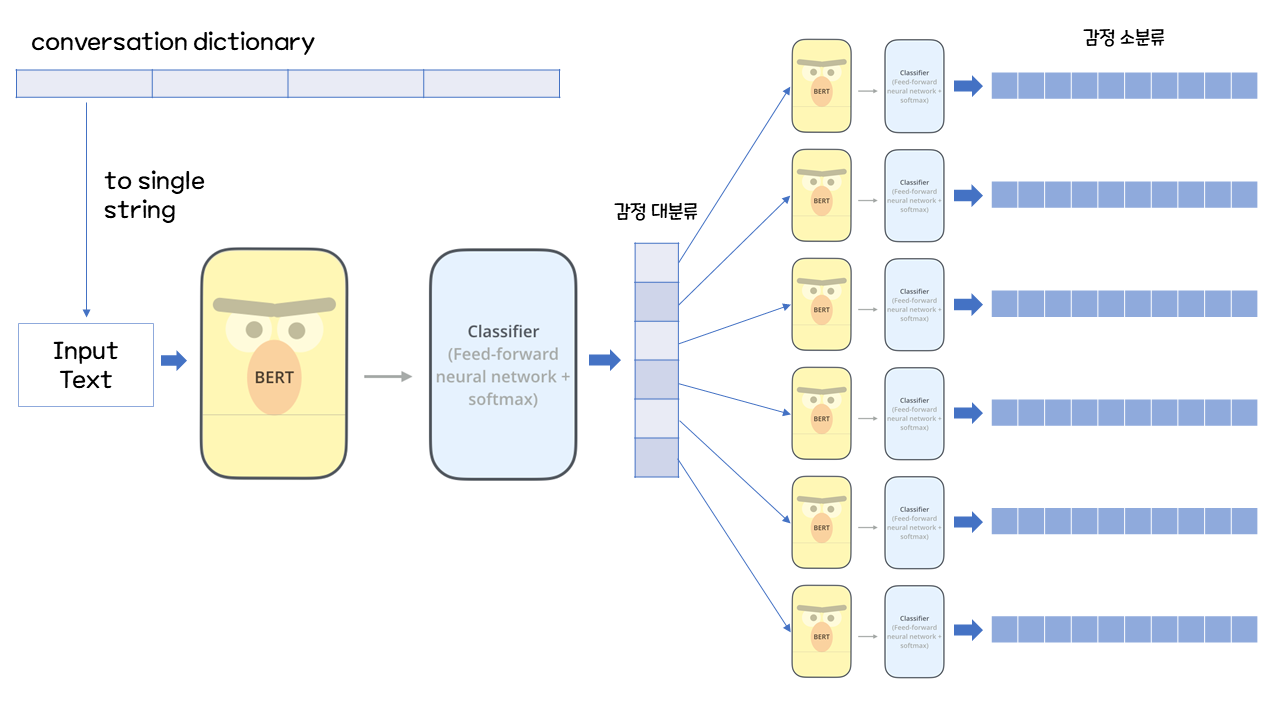
KoBERT-Based Korean Multi-Class Emotion Classification + Hackathon Award
#Python #NLP #SentimentAnalysis #KoBERT #PyTorch
This project fine-tunes KoBERT to classify Korean Twitter text into joy, sadness, anger, and fear, and validates the model performance.
The model reaches ~95% accuracy for joy/sadness/anger, while showing a notable performance drop for fear.
Building on this experience, I participated in the MZ CEC Emotion Dialogue Classification Hackathon, applied and improved the classification approach for conversational data, and placed 4th overall.
(Co-hosted by NIA and Mediazen)